Blog
25th Anniversary: A conversation with Robert Krickl
17.12.2025
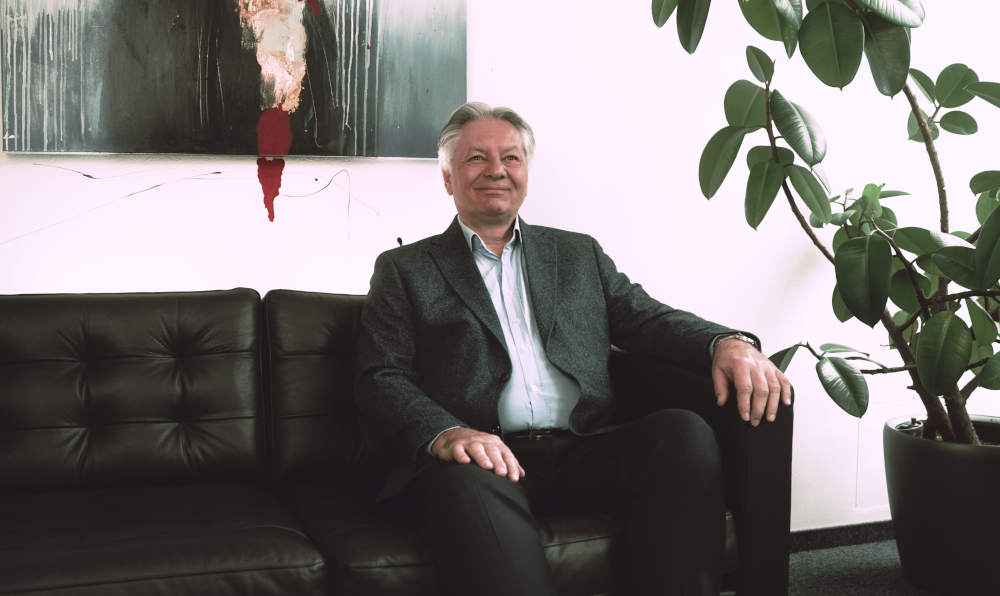
“The idea was simply too good to give up”
On the occasion of A-Trust's 25th anniversary, we look back together with the company's pioneers at its beginnings and defining developments. One of them is Robert Krickl, who served as Chairman of the Supervisory Board of A-Trust from 2000 to 2011 and guided the company through a decisive early phase. As one of the early advocates of the digital signature in Austria, he championed its introduction and establishment with great commitment.
Mr. Krickl, you were Chairman of the Supervisory Board of A-Trust for about a decade. Looking back, what was the biggest challenge during that time?
The biggest challenges were, on the one hand, the complex ownership structure of A-Trust and, on the other hand, dealing with politics. The owners included major banking groups, the Austrian Economic Chamber, the Bar Association and Chamber of Notaries, the National Bank, as well as the telecommunications sector. Within these institutions, there were often internal conflicts that directly affected A-Trust—especially when additional capital was needed. In tough negotiations, I managed to save A-Trust from bankruptcy twice.
As for politics, understanding of the digital signature was initially still quite limited. One exception was then-Chancellor Wolfgang Schüssel, who recognized its importance early on. Nevertheless, there was considerable resistance in working groups with government officials because many simply did not understand the potential the digital signature offered for more efficient workflows and cost savings.
What was the original idea behind the founding of A-Trust?
The idea was to establish the digital signature in Austria—initially primarily in the banking sector, for example for secure online banking. It soon became clear that other sectors also needed to be brought on board to fully tap the potential. The vision was to make the digital signature widely usable in business, industry, and especially in public institutions.
What was your personal vision for the company?
At the time, as Head of Internet and Payment Services at BAWAG, I was one of the people involved in developing the core idea of A-Trust. My vision was clear: the digital signature should be made available as quickly as possible. I saw great potential in it—both technologically and societally.
Is there a particular memory from that time that has stayed with you?
A special moment was when the digital signature worked for the very first time and we were able to issue the first cards—that was a real highlight. And I'm proud that I managed to keep the company alive for many years despite all the difficulties. The idea was simply too good to be abandoned.
What did you personally take away from your time at A-Trust?
I learned that you must believe in what you consider to be right. And a second important lesson: if possible, you should avoid bringing a purely financial investor into a company.
Finally: What do you wish for A-Trust's future?
I wish for A-Trust to continue for at least another 25 years—or even longer. And above all: may no one ever get the idea to hack the digital signature.
We would like to sincerely thank Robert Krickl for the conversation and for his important contribution to A-Trust's history. It is inspiring to see with how much conviction and foresight he advocated for the digital signature and the further development of A-Trust over so many years.